
Cuba Opens Doors to Exiles in Major Economic Shift
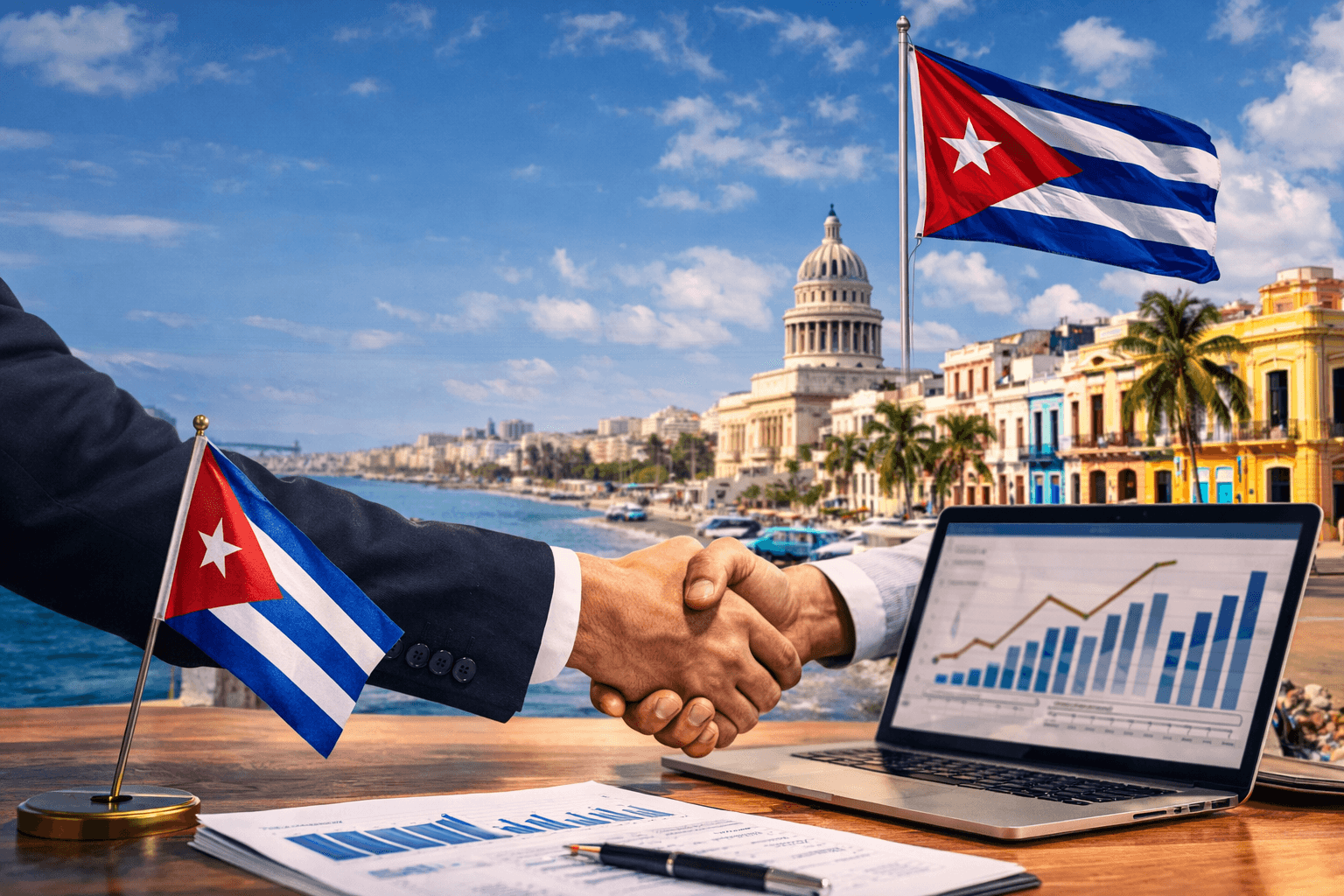
Cuba has taken a significant step in reshaping its economic policy by inviting exiles and foreign investors to invest in businesses on the island, marking a notable shift in its long-standing approach to the diaspora.
Officials said the “doors are open” for Cubans living abroad, including those in the United States, to own and invest in businesses across the country.
The move comes as Cuba faces one of its worst economic crises in decades.
A Shift Driven by Economic Pressure
Cuba’s economy has been under severe strain in recent years.
US sanctions and an oil blockade have led to widespread shortages of fuel, food and medicine. Power outages have become frequent, and inflation has placed further pressure on households.
Officials say attracting investment from the Cuban diaspora could provide much-needed capital and help revive key sectors of the economy.
Deputy Prime Minister Oscar Pérez-Oliva Fraga said there would be “no limitations” on investment from Cubans abroad, signalling a more open approach than in the past.
Breaking With Decades of Policy
For decades, Cuba maintained a cautious and often hostile stance toward its exile community.
Many exiles, particularly in the United States, supported economic sanctions against the Cuban government.
As a result, authorities limited their role in the domestic economy.
While Cuba allowed private businesses on the island from 2021, it excluded Cubans living abroad from owning or investing in them.
The new policy marks a clear break from that position.
Officials now say exiles can participate not only in small businesses but also in larger investment projects, including infrastructure and agriculture.
Untapped Potential of the Diaspora
More than one million Cubans have left the country since 2021, creating a large diaspora with potential financial resources.
Economists say this group represents an important but largely untapped source of investment.
Some analysts describe the policy shift as a pragmatic response to economic challenges.
They argue that Cuba is now trying to leverage its global community to support domestic growth.
However, they also note that the change comes under significant external pressure, particularly from the United States.
Obstacles Remain
Despite the policy shift, major challenges remain.
The long-standing US embargo continues to restrict trade and investment involving American citizens and companies.
This means that even if Cuba allows investment, legal barriers could limit participation from the large Cuban-American community.
There are also concerns about trust.
Some potential investors remain wary due to past government policies, including nationalisation and strict controls on private enterprise.
Analysts say Cuba will need to provide stronger guarantees to attract sustained investment.
Part of Wider Reforms
The move forms part of a broader set of economic reforms aimed at stabilising the country.
Cuba has recently taken steps to expand its private sector and explore new ways to attract foreign capital.
Officials have also signalled openness to improving economic relations with the United States.
These efforts reflect the urgency of the situation, as the country grapples with declining output, energy shortages and growing public dissatisfaction.
A Turning Point or Temporary Measure?
The decision to open investment to exiles could mark a turning point in Cuba’s economic strategy.
If successful, it could lead to increased capital inflows, job creation and stronger ties with the global economy.
However, much will depend on how the policy is implemented and whether broader political and economic conditions improve.
For now, the move highlights the difficult choices facing Cuba as it seeks to navigate a deepening crisis.
It also underscores the growing importance of the diaspora in shaping the country’s economic future.
Topics
Covering startup news, AI, technology, and business at ThePrimely. Delivering accurate, in-depth reporting on the stories that shape the future.