
Blue Origin New Glenn Reflight and the Future of Orbital Infrastructure in 2026
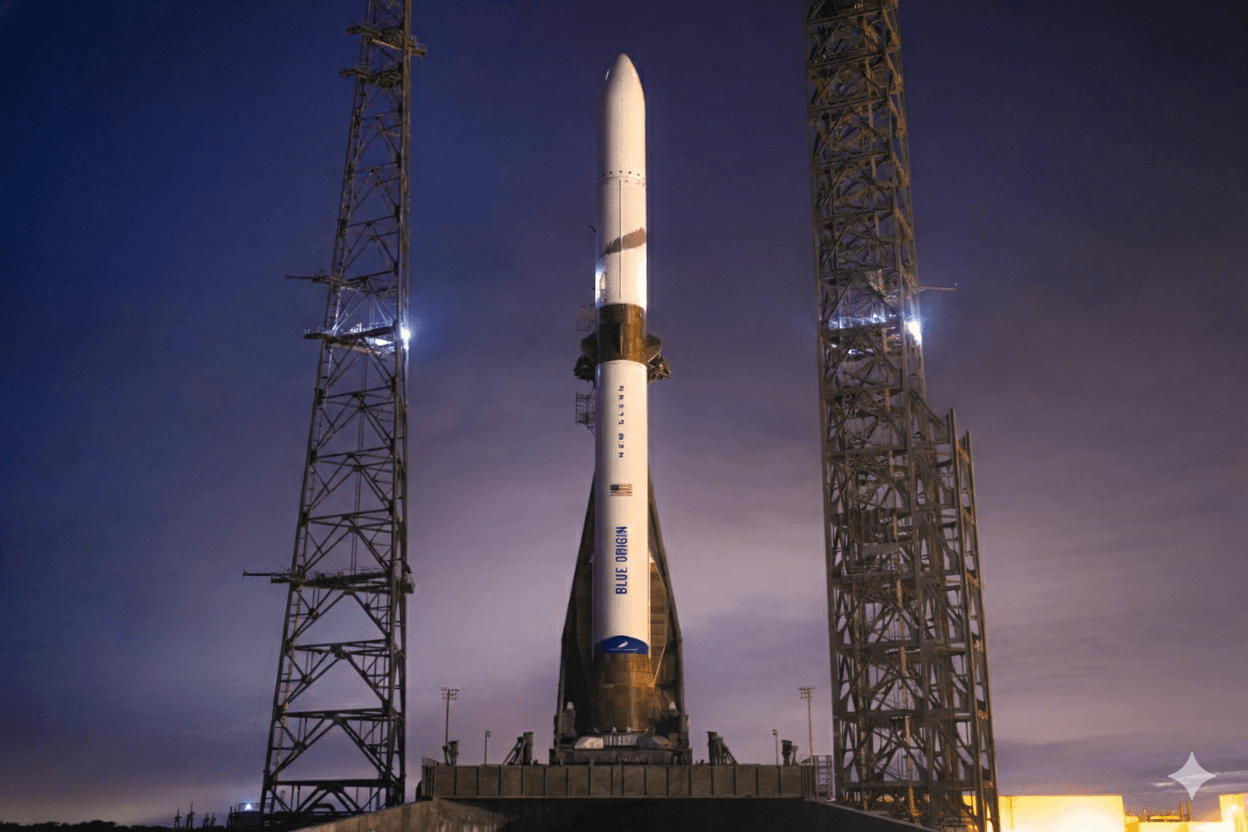
In early 2026 Blue Origin is preparing for a defining moment in its orbital ambitions. The company plans to refly its New Glenn rocket using a previously launched booster. This is not just another launch milestone. It reflects a deeper shift in how space access infrastructure is evolving in the mid 2020s.
As satellite networks expand and competition in orbit intensifies this reflight marks a move from experimentation toward operational maturity.
This article explores why the New Glenn reflight matters how it fits into the broader race for orbital connectivity and what it signals for the future of commercial space infrastructure.
A Reusable Rocket at a Critical Moment
New Glenn is designed as a heavy lift launch vehicle capable of carrying large commercial and government payloads to orbit. The upcoming mission known as NG 3 is expected to reuse the first stage booster flown during a late 2025 mission.
While reusable rock are no longer novel the ability to reuse reliably is what separates demonstration from delivery. For Blue Origin this mission represents a transition from capability to consistency.
The payload further reinforces this shift. The launch will carry an AST SpaceMobile BlueBird satellite built to support direct to mobile broadband connectivity from orbit. These satellites are designed not for experimental use but for real world telecommunications infrastructure.
Why Reuse Matters in 2026
By 2026 reusability is no longer a competitive advantage. It is a baseline expectation.
Reusable boosters reduce cost per launch improve turnaround times and allow launch providers to support larger and more frequent missions. New Glenn is engineered with reuse in mind aiming for multiple flights of the same booster over its operational lifetime.
The implications are clear.
Lower launch costs make space more accessible
Higher launch cadence supports large scale satellite deployment
Operational reliability builds confidence among commercial partners
In this environment mastering reuse is not optional for long term relevance.
The Race for Orbital Connectivity
The NG 3 mission highlights a broader trend shaping the space economy. Orbit is becoming a delivery layer for global connectivity.
Satellite megaconstellations are expanding to support telecommunications emergency response navigation and data services. Direct to device connectivity from orbit represents the next phase of this evolution especially for regions with limited ground infrastructure.
Blue Origin may not operate satellite networks itself but by enabling dependable access to orbit it becomes a foundational player in this emerging ecosystem.
The Competitive Landscape in 2026
The space sector in 2026 is more crowded and more disciplined than ever before.
Established players continue expanding large scale networks
New entrants focus on niche data and security services
Governments partner with private companies for exploration and infrastructure
In this landscape the ability to deliver large payloads repeatedly and reliably is what defines leadership. Blue Origin’s progress with New Glenn signals that commercial launch providers are now central to space operations rather than supporting actors.
Why This Moment Matters
The New Glenn reflight reflects two broader realities shaping the future of space. First space launch is becoming routine. Reliability cadence and execution now matter more than spectacle. Second orbital infrastructure is expanding rapidly. Satellites are no longer isolated projects. They are interconnected systems supporting everyday services on Earth.
This shift mirrors the evolution of terrestrial infrastructure where reliability and scale quietly transformed global connectivity.
What Comes Next
If Blue Origin establishes consistent reuse with New Glenn it positions itself as a long term launch partner for commercial scientific and governmental missions. Orbit is becoming utility. Access to it will define competitiveness. As launch schedules accelerate and satellite networks expand throughout 2026 the space economy is moving toward continuous operation rather than episodic exploration.
In that future rockets like New Glenn are not symbols of ambition. They are tools of infrastructure.
Topics
Covering startup news, AI, technology, and business at ThePrimely. Delivering accurate, in-depth reporting on the stories that shape the future.