
ASRAAM missiles set to make MiG-29 jets more lethal in Indian Air Force upgrade
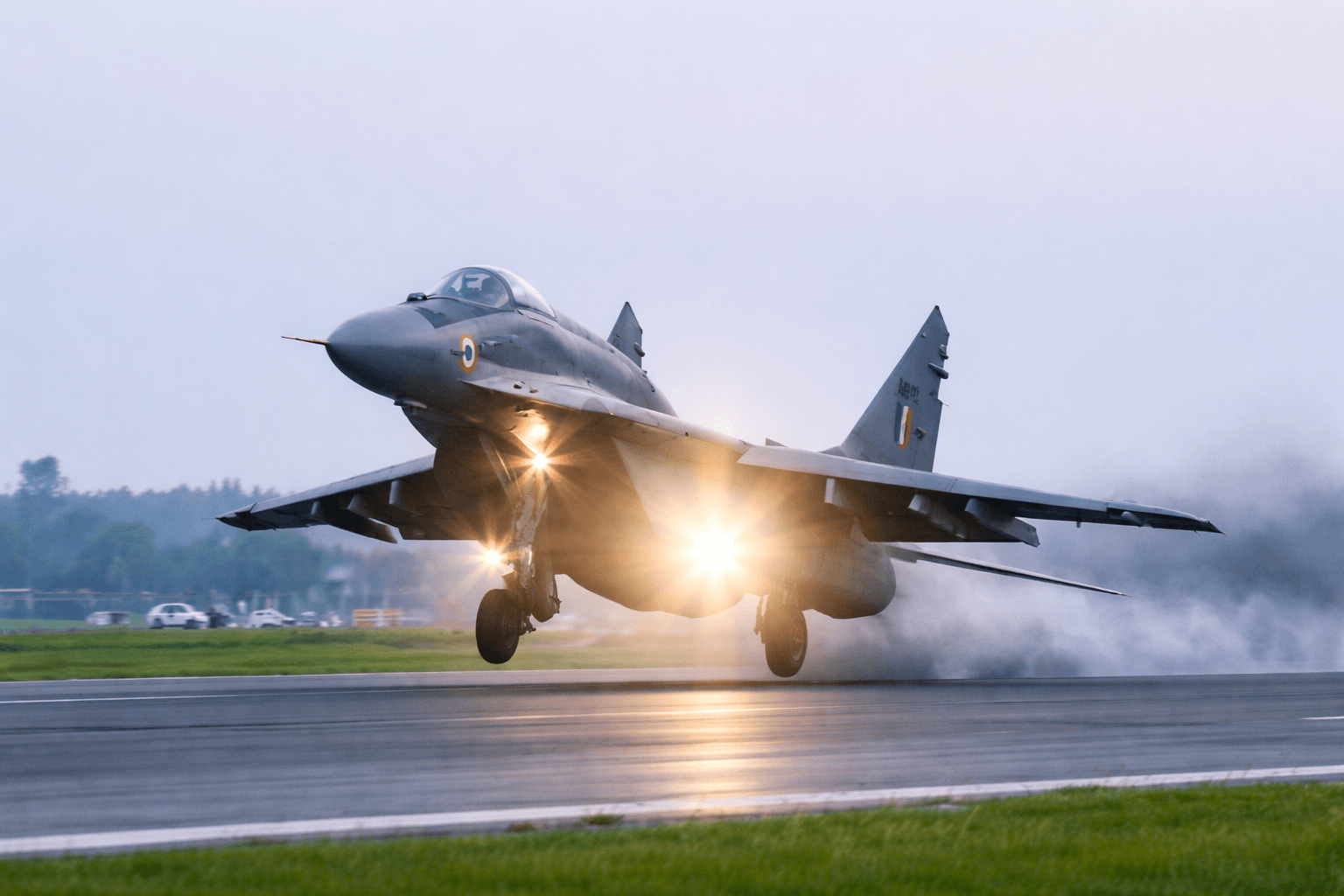
ASRAAM missiles are expected to strengthen the combat capability of India’s MiG-29 fighter fleet as part of an ongoing modernisation programme. The Indian Air Force plans to integrate the advanced short-range air-to-air missile to replace ageing R-73 missile systems currently used on MiG-29 aircraft.
The upgrade aims to improve close-range aerial combat capability through enhanced targeting accuracy and faster response time. The ASRAAM missile is designed to detect and engage enemy aircraft with improved manoeuvrability and extended engagement range.
The MiG-29, a twin-engine air superiority fighter, forms an important part of India’s frontline air defence fleet. Upgraded variants known as MiG-29UPG include improvements in radar systems, avionics, and weapon compatibility.
Technology advantages of ASRAAM missiles
ASRAAM missiles are developed by MBDA UK and are designed as heat-seeking air-to-air weapons capable of high-speed interception. The missile uses imaging infrared guidance technology that allows pilots to lock onto targets even at significant off-axis angles.
The system offers approximately 90-degree off-boresight targeting capability, allowing pilots to engage targets without pointing the aircraft directly toward them. This improves combat flexibility during close aerial engagements.
Compared with earlier short-range missiles, ASRAAM offers improved resistance to electronic countermeasures. The advanced seeker technology also improves accuracy when tracking manoeuvring targets.
Meanwhile, the missile’s larger rocket motor provides higher thrust, enabling rapid acceleration toward targets. Defence analysts say this capability can reduce reaction time during combat scenarios.
Replacement of R-73 missile systems
The existing R-73 missile has served as a primary short-range weapon on MiG-29 aircraft for several decades. The missile entered service in the 1980s and features infrared guidance with off-boresight targeting capability of around 40 degrees.
However, evolving air combat requirements have increased demand for missiles with longer engagement range and improved target tracking capability.
According to IDRW, integration of ASRAAM missiles will provide improved interception capability against modern aircraft threats, including highly manoeuvrable fighter jets.
Additionally, the replacement reflects broader efforts by the Indian Air Force to standardise weapon systems across multiple aircraft platforms.
Role of MiG-29UPG in Indian Air Force fleet
The MiG-29UPG is an upgraded version of the Soviet-origin MiG-29 aircraft, equipped with modern radar systems, improved engines, and advanced avionics.
The aircraft is capable of carrying multiple air-to-air and air-to-ground weapons, supporting a wide range of operational missions. Upgrades have extended the aircraft’s service life and improved its operational flexibility.
The MiG-29UPG includes compatibility with modern beyond visual range missiles such as R-77 systems, enabling engagement of targets at longer distances.
Experts note that upgrading weapon systems can significantly improve aircraft performance without requiring immediate replacement of existing fleets.
Strategic context of India air force modernisation
India has been investing in modernisation of its air combat fleet to maintain operational readiness amid evolving regional security challenges.
The integration of new missile systems forms part of broader efforts to improve aerial strike capability and strengthen defence preparedness.
Modern air combat increasingly relies on advanced sensors, networked targeting systems, and high precision missiles. Therefore, upgrading legacy aircraft with new weapons can extend their operational relevance.
Additionally, integrating modern missiles allows aircraft to engage targets at wider angles and greater distances, improving survivability during combat missions.
Impact on regional air combat capability
The introduction of ASRAAM missiles is expected to enhance the short-range combat effectiveness of MiG-29 aircraft deployed along India’s western and northern borders.
Improved missile agility may provide advantages in dogfight scenarios, where rapid targeting and launch capability are critical.
Analysts suggest that weapon upgrades can help maintain balance in regional air power capability, particularly as neighbouring countries continue to modernise their aircraft fleets.
The development also highlights ongoing cooperation between India and international defence manufacturers in advanced weapons integration.
Future outlook for MiG-29 upgrades
Defence experts indicate that continued upgrades to radar systems, electronic warfare capability, and weapons integration may further enhance the performance of the MiG-29UPG fleet.
Modernisation programmes aim to ensure that existing aircraft remain effective while newer platforms such as Tejas Mk2 and AMCA are developed.
As air combat technology evolves, integration of advanced missile systems remains a key component of maintaining operational readiness in changing security environments.
Topics
Covering startup news, AI, technology, and business at ThePrimely. Delivering accurate, in-depth reporting on the stories that shape the future.