
Apple Expands iPhone Production in India as Output Jumps 53% Ahead of iPhone 18
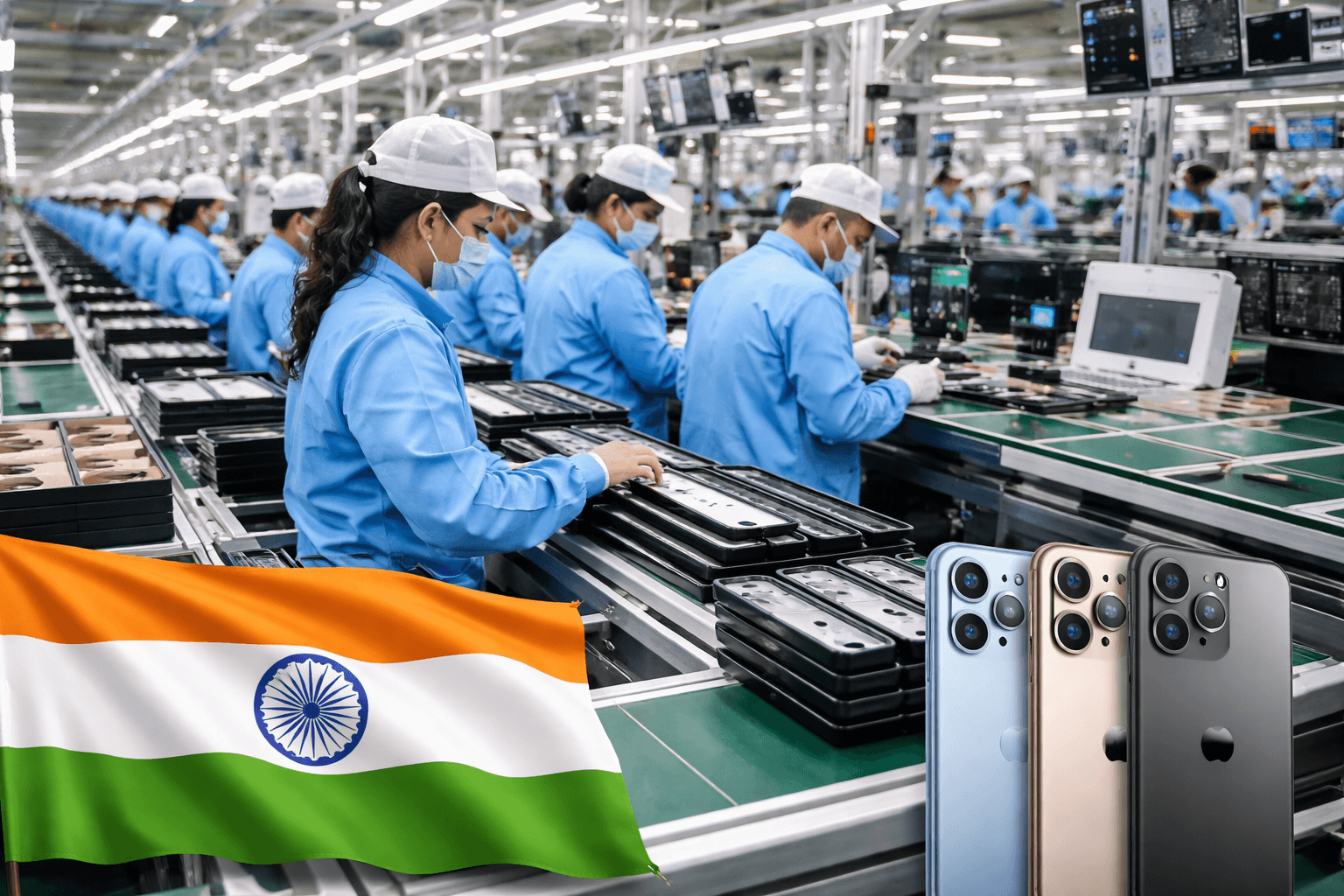
A Strategic Shift in Apple’s Global Manufacturing
Apple is accelerating its manufacturing strategy. The company is rapidly increasing iPhone production in India. Recent reports show a dramatic surge in output.
Production in the country grew by 53 percent in 2025. As a result, one out of every four iPhones is now produced in India.
This shift marks a major milestone for both Apple and India. It also signals a broader transformation in the global electronics supply chain.
With the iPhone 18 launch approaching, India is emerging as a central pillar in Apple’s manufacturing ecosystem.
India’s Rise as a Global iPhone Manufacturing Hub
India has moved from a secondary assembly location to a strategic production center.
Several Apple suppliers now operate large facilities in the country. These include major manufacturing partners such as Foxconn, Pegatron, and Tata Electronics.
Together they assemble multiple iPhone models across production plants in southern India.
Recent industry estimates highlight the scale of this transformation:
- iPhone production in India increased 53 percent in 2025
- India now produces roughly 25 percent of global iPhones
- Apple now assembles all current iPhone models in India
Only a few years ago, India produced a small portion of Apple devices. Today it plays a central role in the company’s global output.
This rapid expansion reflects long term strategic planning from Apple.
Why Apple Is Expanding Manufacturing in India
Several structural factors explain Apple’s growing investment in India.
Supply Chain Diversification
Apple has historically depended heavily on China for manufacturing.
However, geopolitical tensions and supply chain disruptions pushed Apple to diversify production.
India provides a large skilled workforce and strong government incentives for electronics manufacturing.
As a result, Apple has steadily shifted a significant portion of assembly operations to the country.
Government Policy and Incentives
India’s Production Linked Incentive program has played a crucial role.
The policy encourages global manufacturers to produce electronics locally. Companies receive financial incentives tied to production levels.
This framework has helped Apple partners scale operations rapidly.
Growing Domestic Market
India is also one of the fastest growing smartphone markets in the world.
Local manufacturing allows Apple to reduce import costs and improve supply efficiency.
Consequently, devices produced in India can serve both domestic demand and global exports.
Production Scale and Operational Expansion
Apple’s production ramp up has been significant.
Factories across Tamil Nadu and Karnataka have expanded capacity. Many facilities now operate large scale assembly lines capable of producing millions of devices.
For example, Apple suppliers have increased workforce levels and introduced advanced manufacturing systems.
The company has also started assembling premium models locally, something that rarely happened in earlier years.
This move indicates strong confidence in India’s manufacturing ecosystem.
Furthermore, exports from India have increased sharply. iPhones produced in the country now ship to several global markets including Europe and the Middle East.
A New Global Manufacturing Balance
The growth of iPhone production in India is reshaping the global electronics landscape.
Reduced Dependence on China
China remains Apple’s largest manufacturing base. However, India is quickly closing the gap.
Industry analysts expect India’s share to grow further over the next few years.
Boost for India’s Electronics Sector
The expansion has broader economic implications.
Apple’s ecosystem includes hundreds of suppliers and logistics partners. As production grows, supporting industries such as component manufacturing, packaging, and logistics also expand.
This strengthens India’s position in the global electronics supply chain.
Job Creation and Skill Development
Large scale production creates significant employment opportunities.
Manufacturing facilities require engineers, technicians, and assembly workers. Consequently, Apple’s growth supports workforce development in high technology manufacturing.
Strategic Implications for Apple
Apple’s strategy reflects a careful balancing act.
First, diversification reduces operational risk. Manufacturing across multiple countries protects the company from geopolitical disruptions.
Second, India offers long term scalability. The country has a young workforce and expanding industrial infrastructure.
Third, proximity to emerging markets supports Apple’s global growth ambitions.
Together these factors make India a critical pillar in Apple’s future manufacturing strategy.
Topics
Covering startup news, AI, technology, and business at ThePrimely. Delivering accurate, in-depth reporting on the stories that shape the future.