
Ancient Giant Kangaroo Likely Hopped, New Fossil Study Suggests
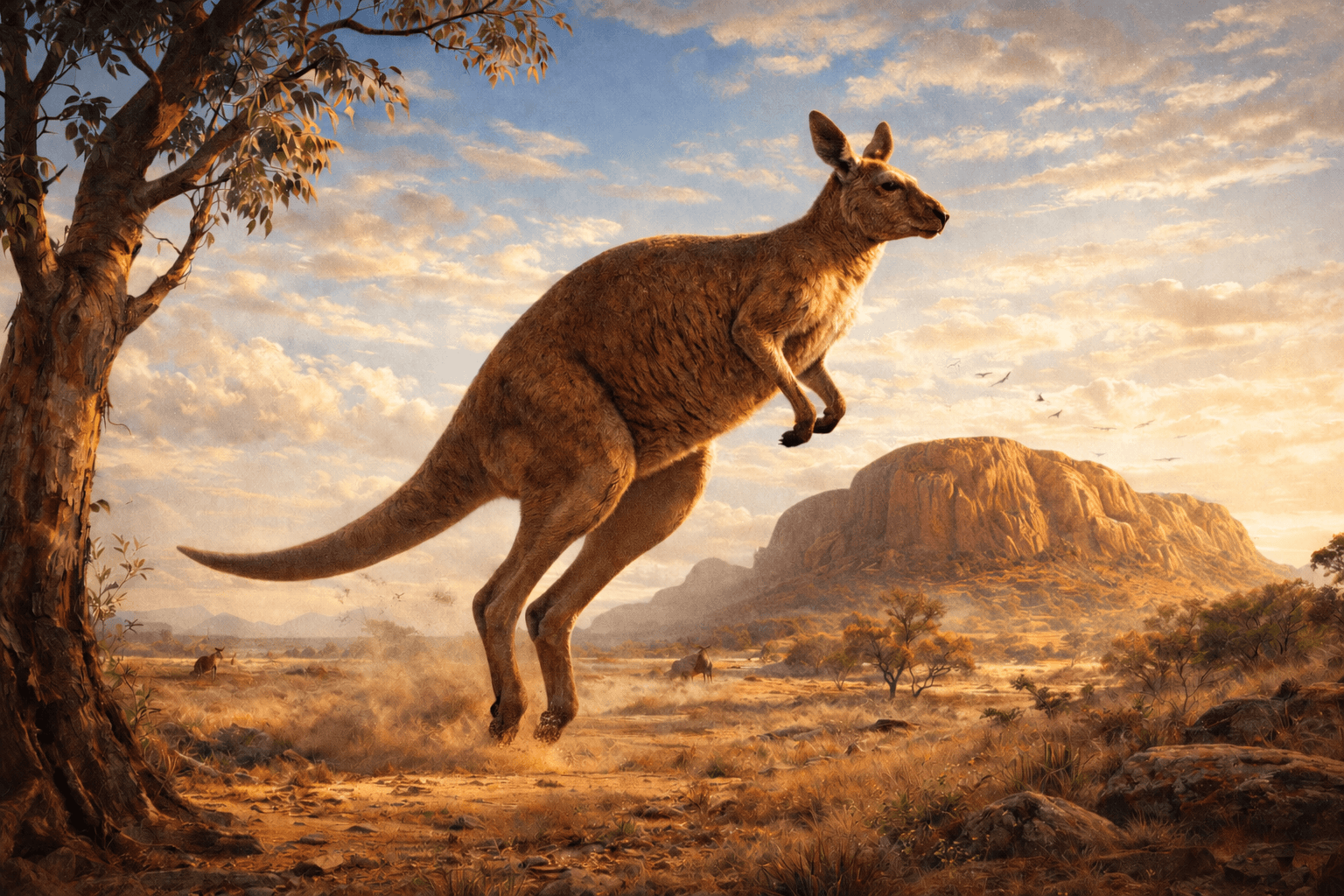
A new paleontological study indicates that several prehistoric kangaroo species once thought too massive to hop may actually have been capable of limited ancient giant kangaroo hopping, overturning decades of assumptions about how these enormous marsupials moved across Ice Age Australia.
The research, published in Scientific Reports, focuses on fossilized limb bones from extinct kangaroos that lived during the Pleistocene epoch. Some of these animals weighed more than 200 kilograms, making them among the largest hopping mammals to ever exist. Earlier biomechanical models suggested such weight would make hopping impossible, forcing scientists to imagine alternative locomotion styles such as walking or bounding. The new findings, however, point to a more complex picture.
Revisiting the Biomechanics of Extinct Kangaroos
Researchers analyzed hindlimb fossils from species including Protemnodon and sthenurine kangaroos, comparing them with modern kangaroos and wallabies. A major focus was the structure of the fourth metatarsal bone and the calcaneum, both crucial for absorbing impact and storing elastic energy during hops.
The study found that these bones in giant species were more robust than previously assumed. Their shapes and density suggest they could tolerate higher stresses during landing than earlier scaling models predicted. Rather than being structurally fragile, the limb architecture appears adapted to handle substantial loads.
This evidence challenges the long-standing belief that body mass alone set a strict upper limit for hopping in kangaroos. While modern large kangaroos typically weigh under 100 kilograms, fossil records show some ancient relatives were more than twice that size. The new fossil locomotion study suggests size did not automatically eliminate hopping ability.
Why Earlier Models May Have Been Wrong
Previous interpretations relied heavily on extrapolations from living species. Scientists assumed that as kangaroos grew larger, tendon stress and skeletal forces would increase beyond safe thresholds. However, those models did not account for evolutionary modifications unique to extinct species.
The new analysis indicates giant marsupials may have developed proportionally stronger bones and altered limb mechanics. Instead of being oversized versions of modern kangaroos, they likely possessed specialized anatomical features suited to their environment and body mass.
This reframes the debate about giant marsupial movement. Rather than abandoning hopping entirely, some species may have used it selectively, particularly for short bursts of speed or navigating uneven terrain.
Movement Diversity in the Pleistocene
Australia’s Pleistocene landscapes hosted a remarkable array of megafauna. Giant kangaroos lived alongside enormous reptiles, birds, and mammals. In such environments, locomotion influenced feeding, migration, and predator avoidance.
If Pleistocene kangaroo species could hop at least occasionally, it implies greater mobility than previously thought. That mobility may have allowed them to exploit broader habitats or escape threats more effectively. It also suggests that locomotor diversity among extinct kangaroos was higher than assumed.
Scientists now believe these animals likely combined multiple movement styles. Hopping may have been used for acceleration or obstacle crossing, while slower walking or bounding dominated daily travel. This flexible approach would mirror patterns seen in other large mammals that balance speed, stability, and energy efficiency.
Implications for Evolutionary Biology
Understanding extinct locomotion is critical for reconstructing ancient ecosystems. Movement determines how animals accessed food, avoided danger, and interacted with their surroundings. Evidence supporting ancient giant kangaroo hopping affects interpretations of fossil site distribution and species behavior.
The findings also contribute to broader questions about how large animals evolve efficient movement systems. They show that biomechanical limits can shift over evolutionary time when anatomy adapts accordingly. What once seemed a hard physical boundary may instead represent a limit specific to modern species.
Not Built for Endless Hopping
Researchers caution that hopping ability does not mean these giants matched modern kangaroos in endurance or agility. Their massive size likely limited sustained hopping, placing strain on tendons and joints during repeated impacts. Short hops may have been feasible, but long-distance travel probably relied on slower gaits.
Still, the study highlights how extinct kangaroo biomechanics were more advanced than assumed. These marsupials were not simply oversized and clumsy; they were structurally equipped to manage their scale in sophisticated ways.
A Shift in Scientific Perspective
The research underscores the importance of direct fossil evidence over simple scaling comparisons. As analytical techniques improve, scientists are gaining clearer insights into the capabilities of extinct animals.
For paleontology, this marks a shift toward recognizing that ancient species often evolved unique solutions to physical challenges. The idea that giant kangaroos could hop, even in limited contexts, reshapes how scientists imagine prehistoric Australian life.
The discovery also reinforces the dynamic nature of scientific understanding. Long-held theories about extinct animal movement can change when new data emerges, reminding researchers that evolutionary history is rarely straightforward. As more fossils are examined, future studies may refine estimates of how frequently these animals hopped and under what conditions. For now, the evidence strongly suggests that the image of giant kangaroos confined to slow walking may be incomplete. Instead, ancient giant kangaroo hopping appears to have been biomechanically possible, adding a new dimension to our understanding of Australia’s lost megafauna.
Topics
Covering startup news, AI, technology, and business at ThePrimely. Delivering accurate, in-depth reporting on the stories that shape the future.